McGill continues to avoid language that would protect your working conditions. We continue to push them on the matter - Unit 3 Bargaining Update #17
On February 18th, we met with McGill for the final bargaining session before we table our monetary clauses. It was a tense and frustrating session: as we approach tabling our monetary clauses on March 11 and we await McGill’s response on March 18, there is an increased sense of just how much is at stake.
The session started off quite late as McGill needed additional time to prepare, but after about 50 minutes, the bargaining session began with trading proposals. To start this off, they provided us with their whole proposal for Article 11, a translation of Article 14, and a proposed workload form. The first key item discussed was positions at the McGill Writing Centre (MWC). Importantly, the University’s Article 11 proposal erased the difference in the MWC between tutors and writing group facilitators. These are very different jobs, and to consolidate them under one label would be detrimental to both tutors and writing group facilitators! McGill was receptive to this and we are addressing this in our proposal for March 11.
Regarding workload forms, these are an invaluable tool for both workers and course supervisors, as it is easy to forget about how many small tasks are necessary for a course to run smoothly. They also fight against overwork, as it is easy for course supervisors and workers to underestimate just how much time each part of the job takes. The workload form we had proposed previously listed clearly delineated tasks one might spend time on—such as ‘email correspondence’—as well as empty space for listing tasks not already present. It was, by and large, a very flexible document. This largely modelled the workload form used by Unit 1 workers (Teaching Assistants).
However, the form the employer proposed was significantly underworked: just an empty table, with little to no specification as to what work might be listed. The justification provided for this was that this would be easier for hiring unit administrators. However, bargaining committee members were quick to point out how much more administrative work would be involved when the hundreds of workload forms they’d receive list the same work in hundreds of different ways. Furthermore, this doesn’t address our concerns of overwork!
One other concerning element of the employer’s proposal was that employees could fill these out upon request. This diminishes the role of workload forms as being a critical way workers can both understand their job tasks and protect themselves from overwork.
The bottom line is that workload forms provide a structure for contracts and provide some degree of temporal accountability, without which there is a much greater likelihood that workers will provide unpaid labour above and beyond what they are contracted for. Thus, a clear, well-organized yet flexible workload form is something we will continue to strongly advocate for.
The other key subject that we brought to the table was Article 6. Our members have been clear about the importance of language that addresses transphobia, misgendering, and deadnaming. This has been a repeated issue that we have brought up at every bargaining session for a long time now, and we will continue to bring it up until our membership is given the protection it deserves.
In contrast, McGill’s position has been that they do not want to include more language than what is already in the policy, and they consider the policy to already encompass these forms of harassment.
Furthermore, McGill suggested more proactive participation from our end at various policy reviews, stating we have a seat and are able to influence change at those sessions. This is despite our very vocal and proactive participation in the review for the Policy on Harassment and Discrimination during the Winter 2025 semester. As a union, we will continue to pursue all possible avenues to protect our members, especially as McGill shows a continued unwillingness to grapple with the growing tide of transphobia facing the queer community at large.
Due to the late starting time, we only briefly touched on Article 13. We inquired specifically about why they are unwilling to provide us with final enrollment numbers, and were told, in turn, that McGill might just as well ask us what we do with these numbers. Ultimately, our only interest is advocating for and the protection of our workers. Information like enrolment numbers is important to get a sense of how many students, roughly, each worker is responsible for. This is the last major sticking point of Article 13, and we hope that in upcoming meetings we will be able to move on from this article to others.
One positive outcome of this bargaining session is that both sides signed Article 14, highlighting that there is still continued momentum before the start of the monetary side of the negotiations.
Finally, it is worth highlighting how important YOUR participation is in this process. Attending a negotiation session is a great way to participate meaningfully in workplace democracy and have a say in YOUR contract—plus, it puts pressure on McGill. Sign up for our next session by using this form. You can see the process firsthand, understand what is truly at stake, and hold the employer accountable by demonstrating visible member engagement at the table.
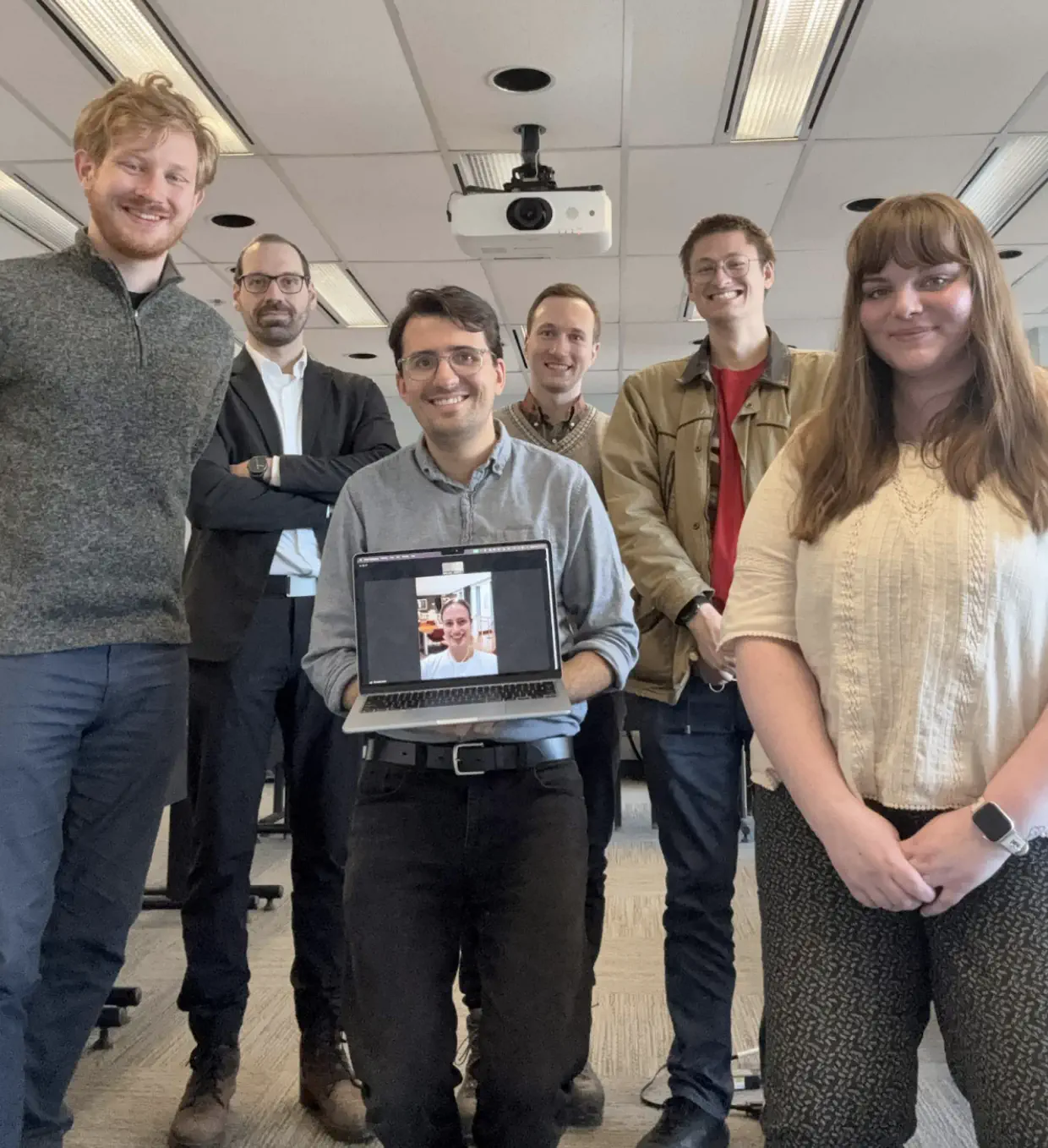
On our side of the table were Emma Moore (4th Year, Industrial Relations), Donald Morard (PhD Candidate, Grader, History), Jordan Cowie (2L Faculty of Law), and Guillaume Forest-Allard, our advisor from our affiliate union Fédération nationale des enseignantes et des enseignants du Québec (FNEEQ). We also had 7 members join for open bargaining.
Do you have thoughts and insights to provide (of course you do!)? Please don’t hesitate to reach out to bargaining.casual1@agsem-aeedem.ca with your insights, questions, or concerns!
And if you want to attend our next bargaining session on Wednesday March 11th, please fill out this form to sign up and we’ll be in touch!
Love and solidarity,
Your Bargaining and Bargaining Support Committee